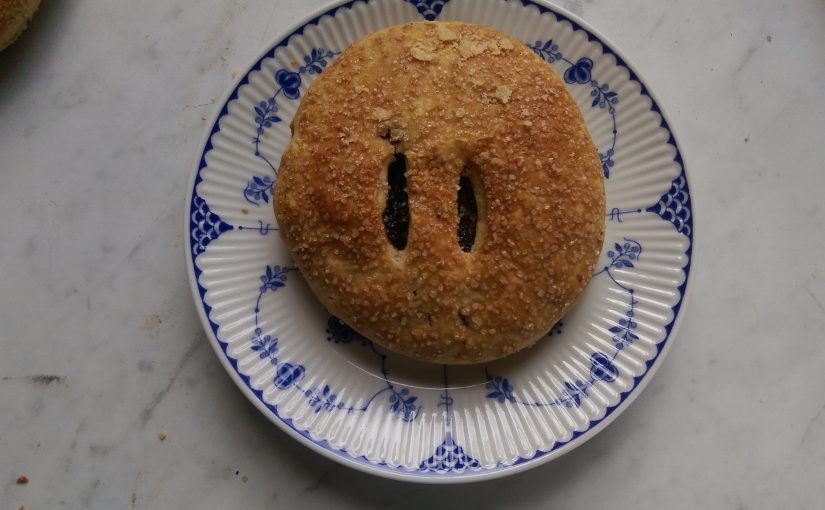
The experience of eating an Eccles Cake should never be rushed. Each sensation should be savoured and fully appreciated.
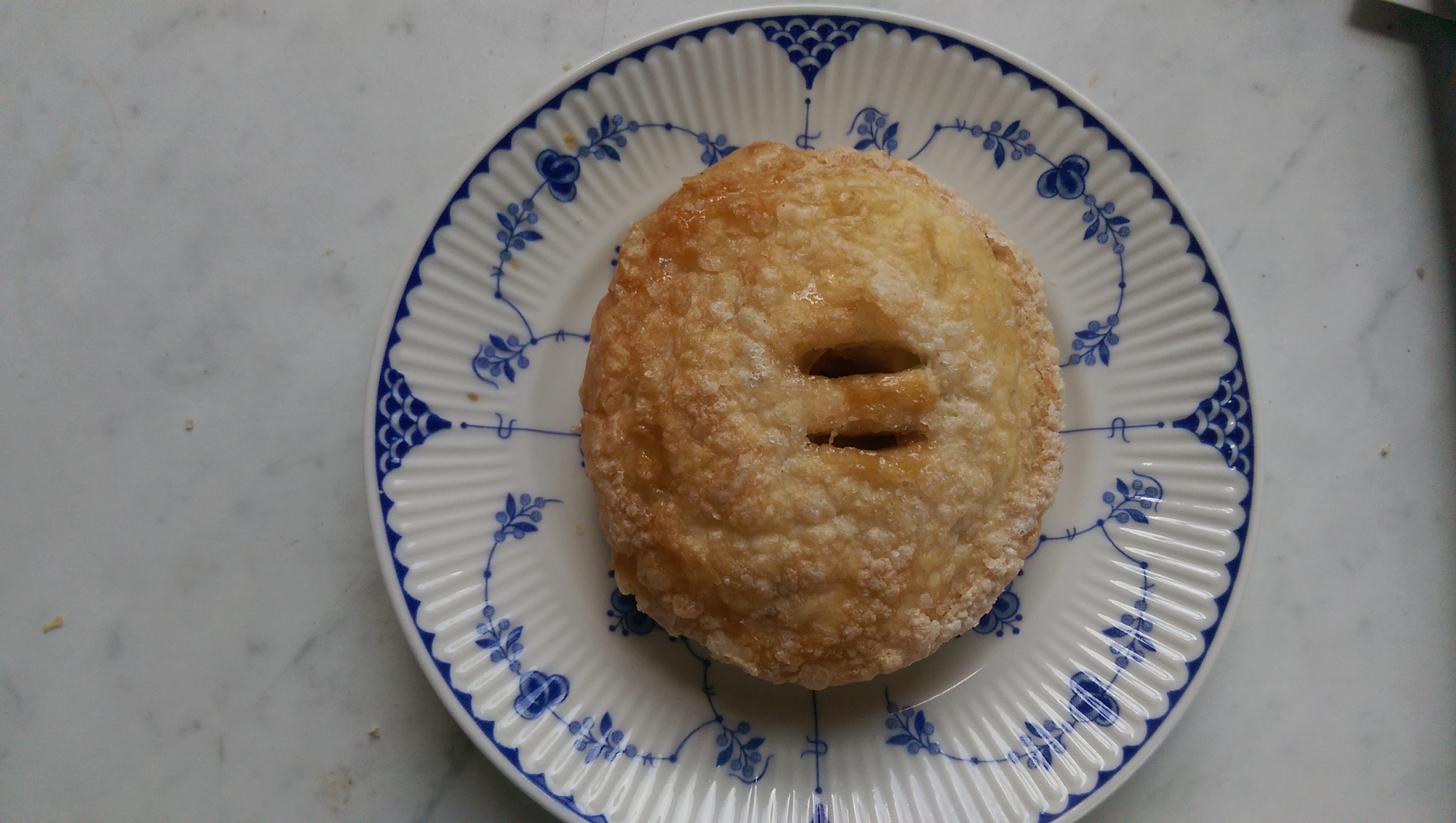
The First step is to enjoy the tempting appearance of the confection. Baking should have provided you with an interesting (unique?) cake. Its shape should not be too perfect and there should be some “interest” in the crust and venting. It should be baked to an attractive colour – anemic is bad!
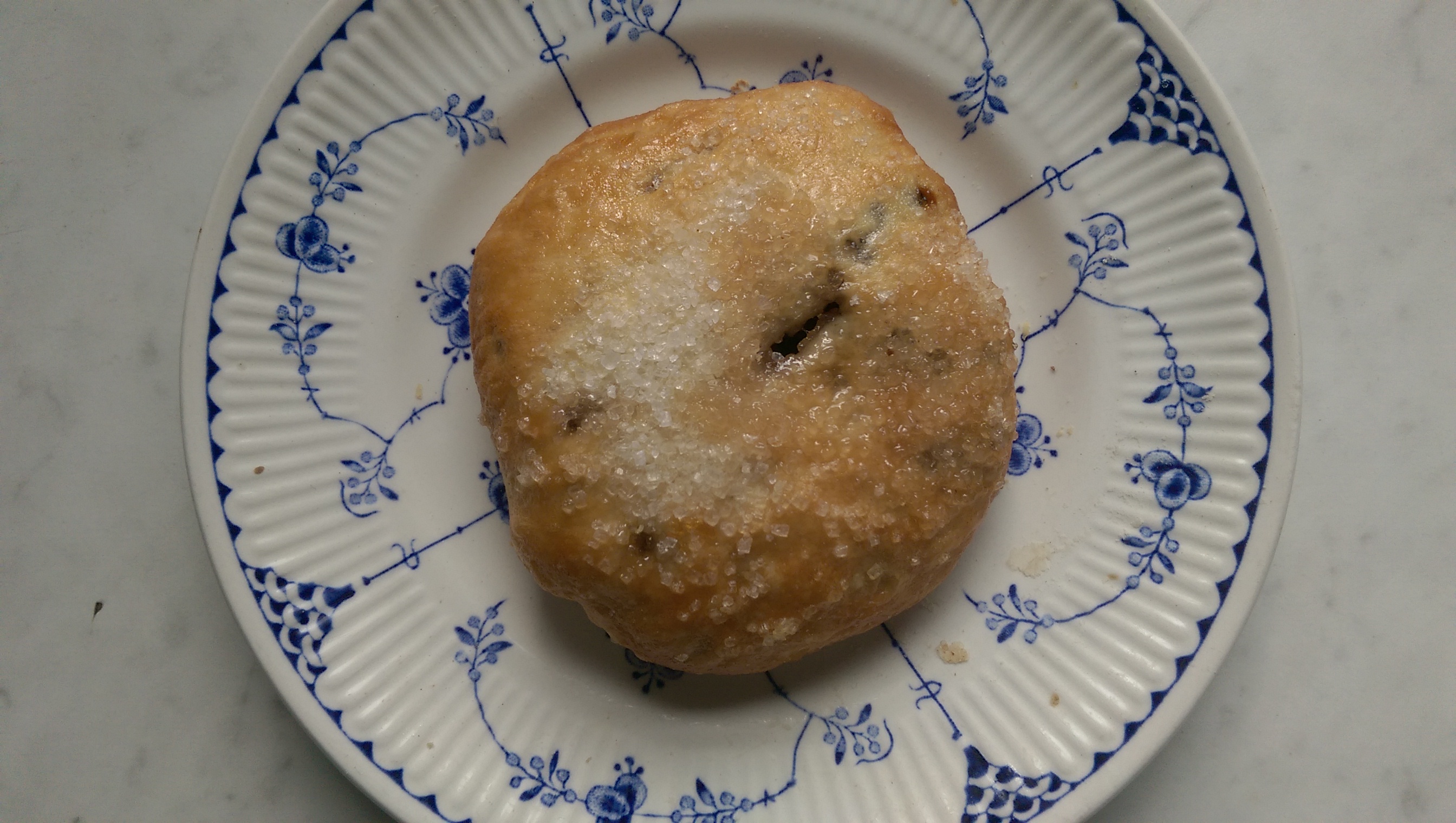
The sugar baked onto the surface can be in varying quantities. In some cases it forms an additional crust. The type of sugar, its quantity are topics to debate.
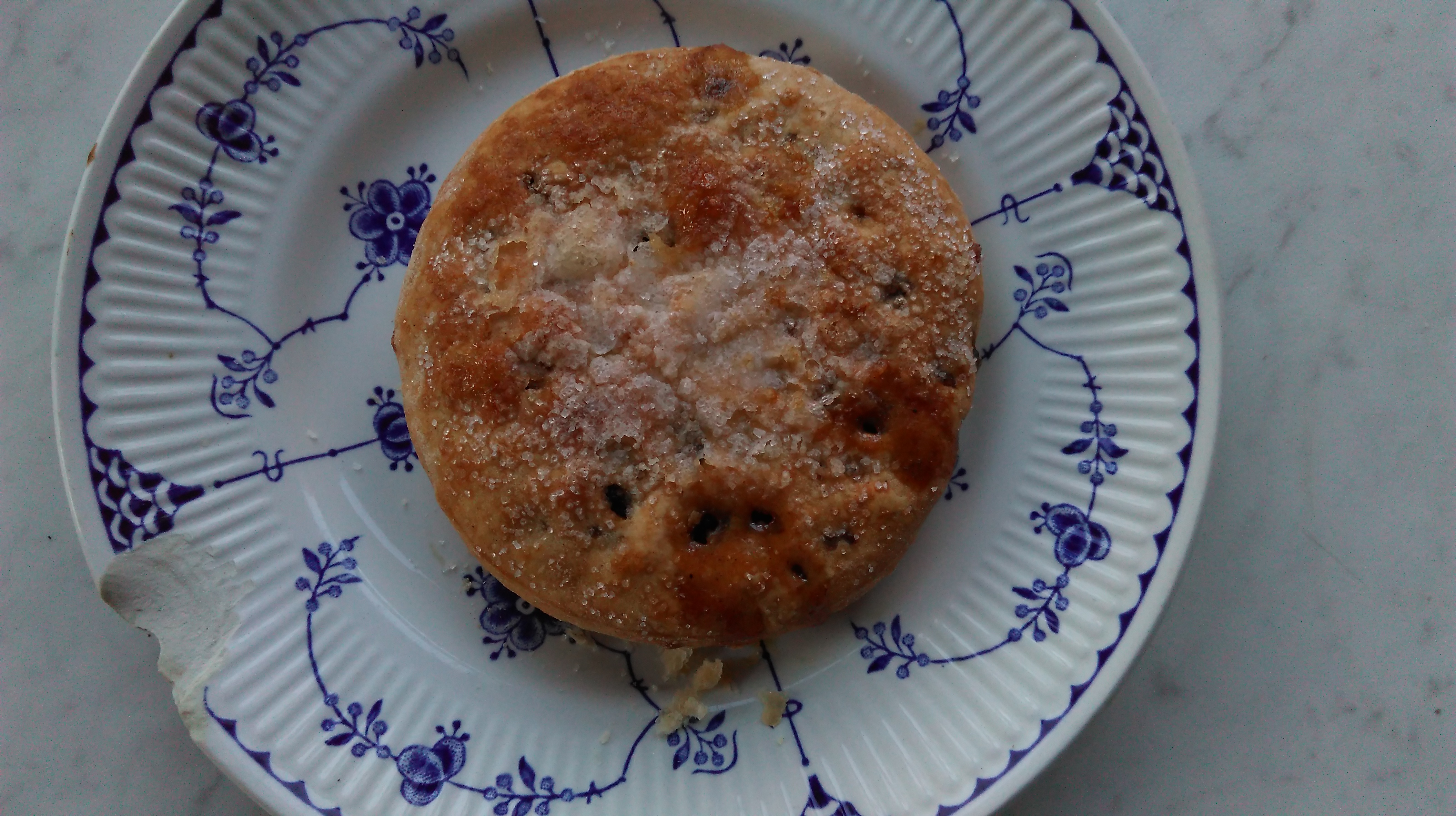
The adhesion of the sugar to the crust is important. Our Senior Taster, Sue, the deep bosomed, was trying a cake from Cheshire ( a little flaccid) topped with a quantity of small grained white sugar. The sugar was not attached to the crust and was deposited down her (ample) cleavage! It did not progress to the Knock-Out Stage.
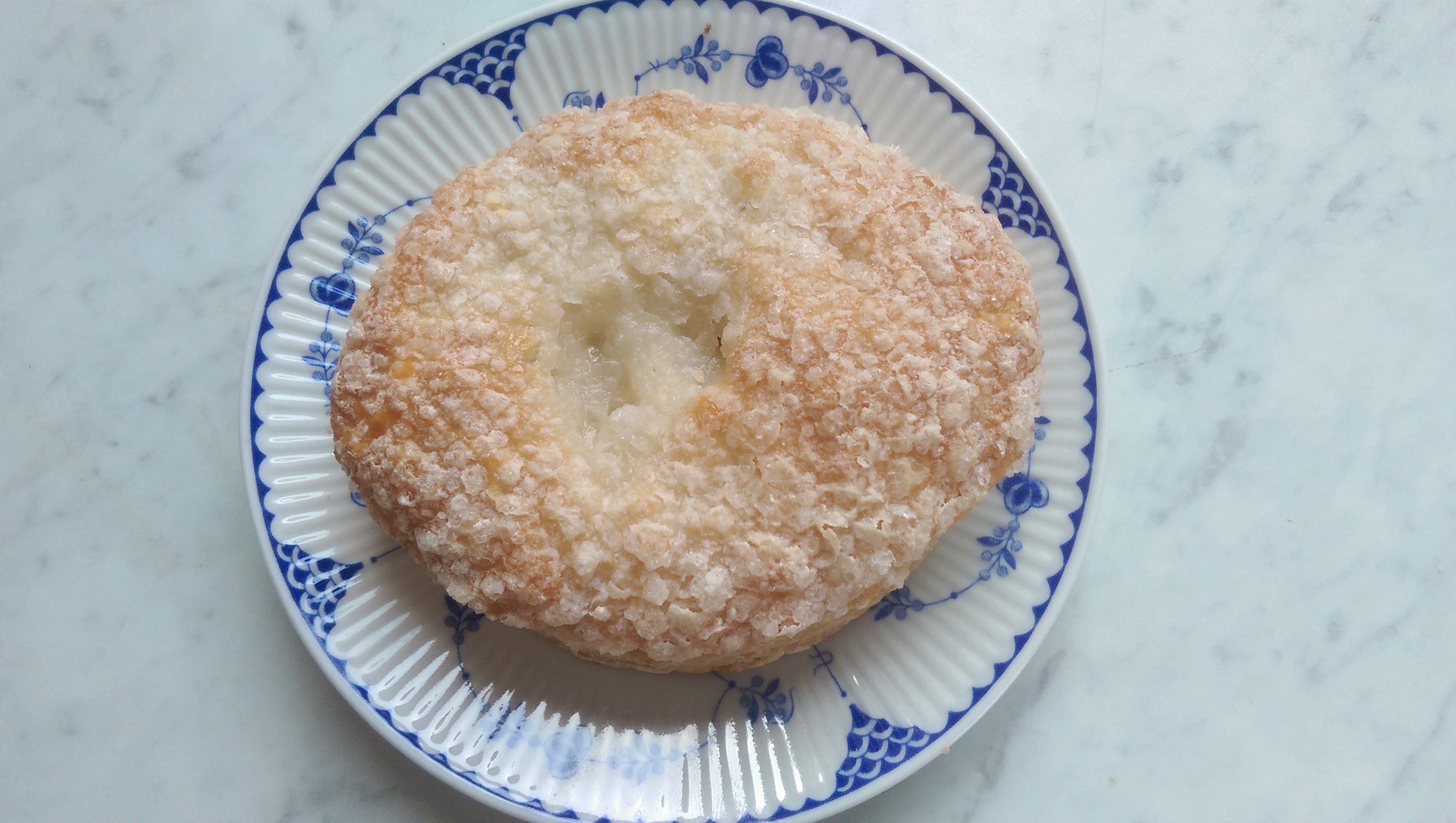
The fat used in the pastry has a significant impact on the taste and texture of the pastry. Obviously selling price, pastry texture, finished colour and keeping qualities come into play. Our preference is butter. Use of other fats will not exclude entry as taste and texture are the final arbiters.
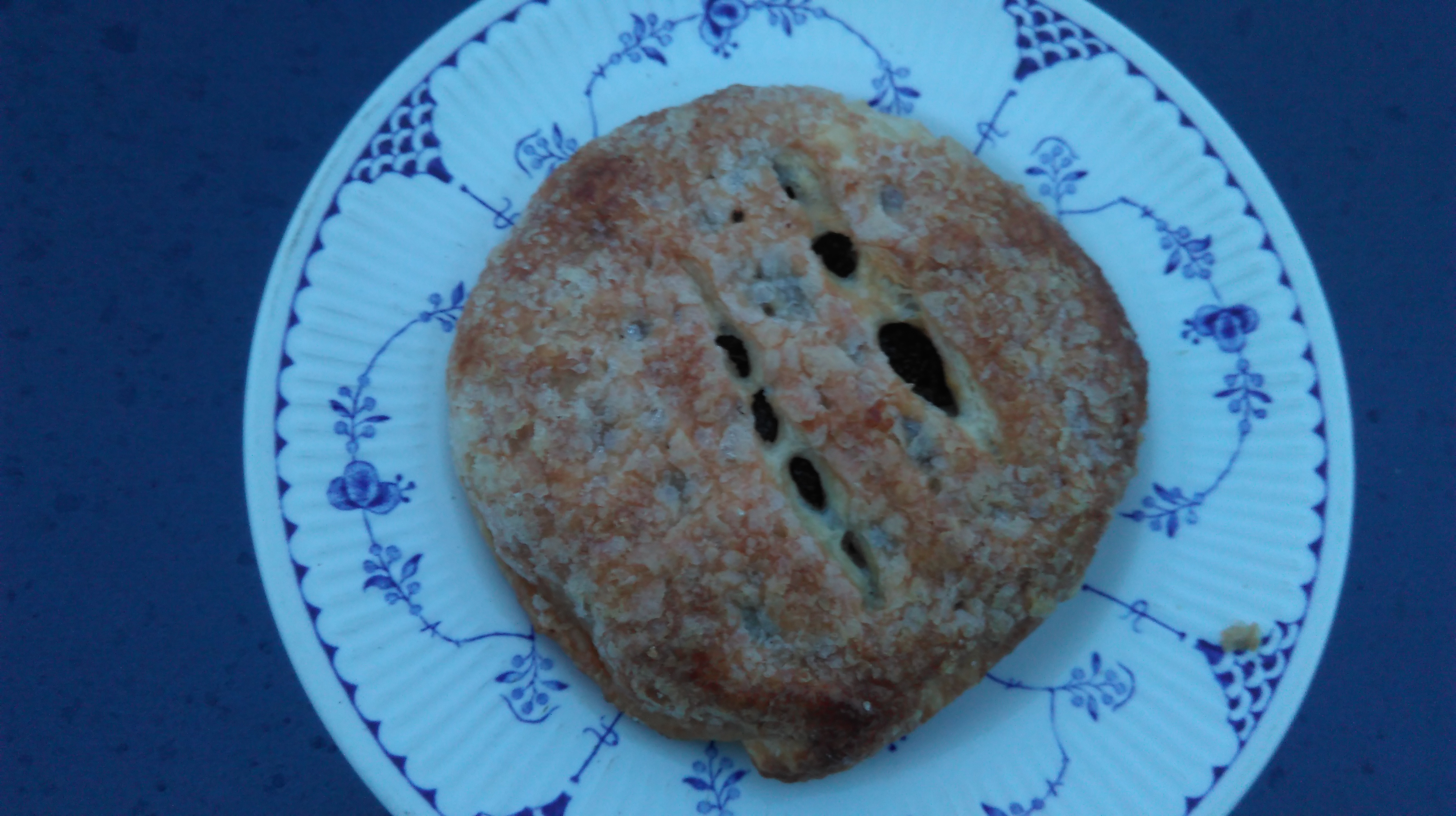
Venting the crust is we believe essential and we enjoy the huge varieties of patterns used.
The rise of “In-store Bakeries” is both a blessing and a curse. The produce is seldom baked by the person who made it. The use of raising ingredients can make an Eccles Cake more like a puff pastry. However we know many people enjoy the product and who are we to sneer at them? (Shuffles grumpily away muttering Philistines!)
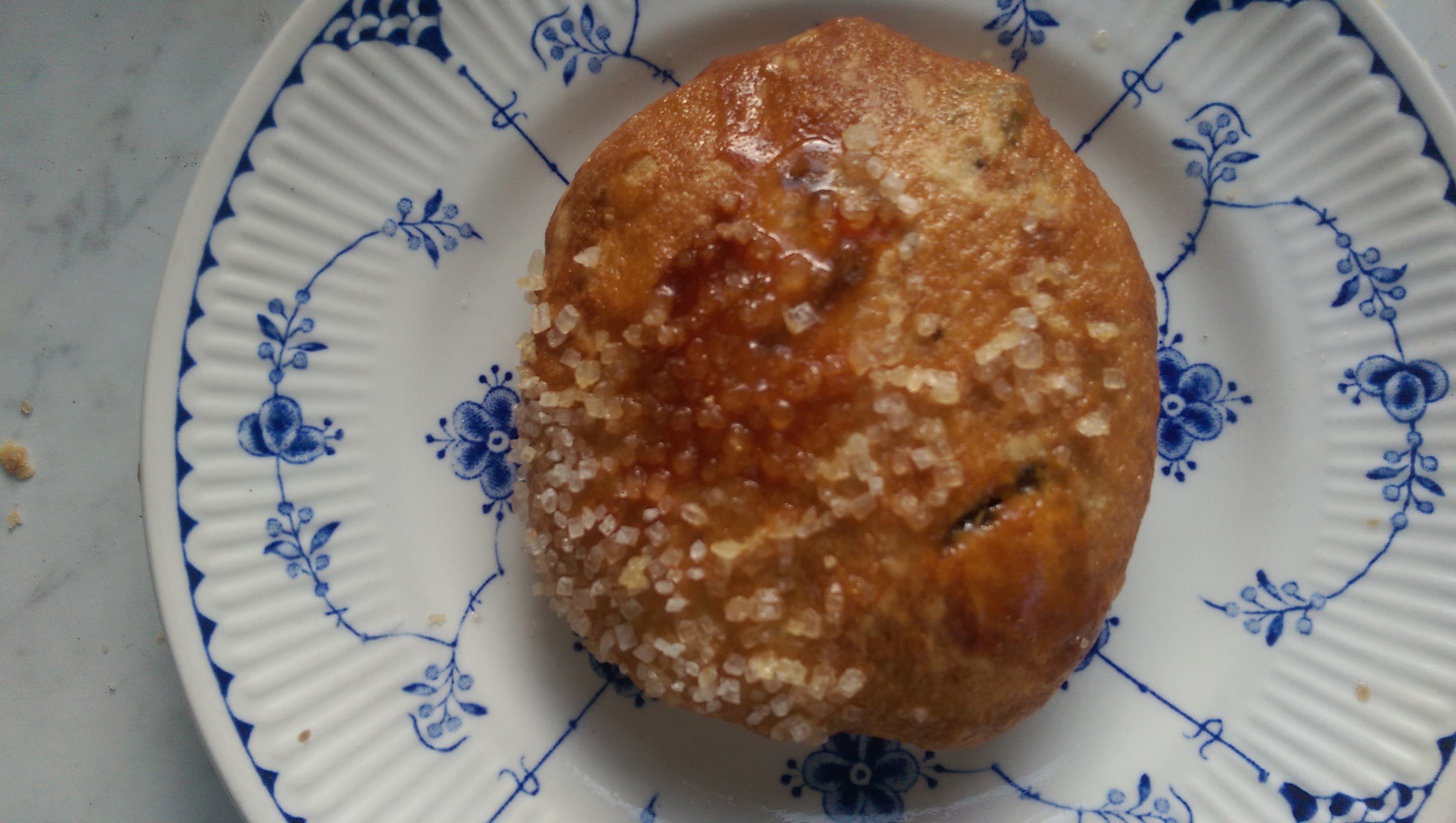
From this source we have seen sugar, large crystal, white, baked to form a secondary outer crust. This is an innovation we are not enamoured of. Eating produce of this kind can be an explosive experience, filling ones beard with detritus.
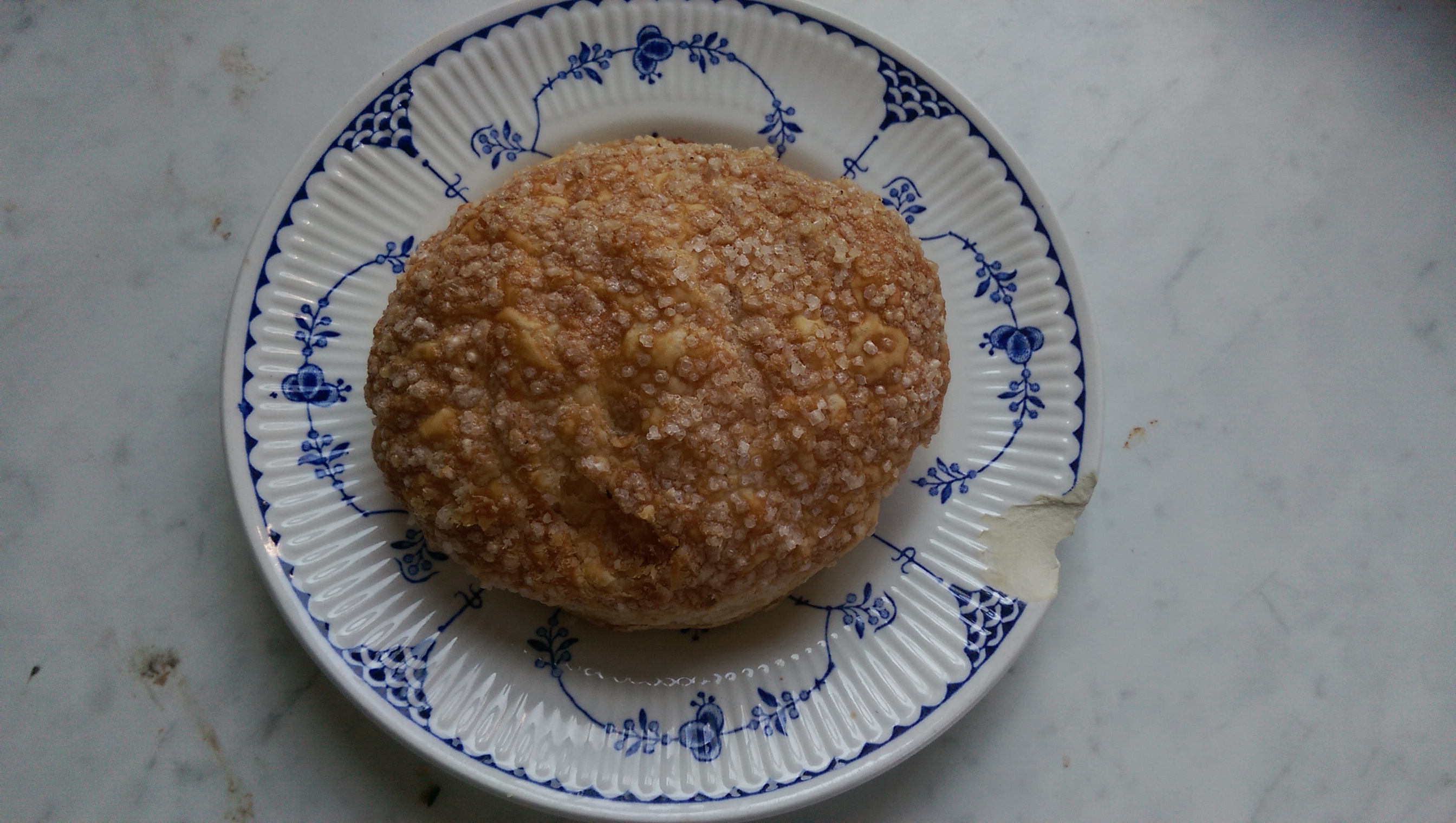
The thickness and consistency of the base is important to the whole eating experience. The base should be thin, crisp and strong.
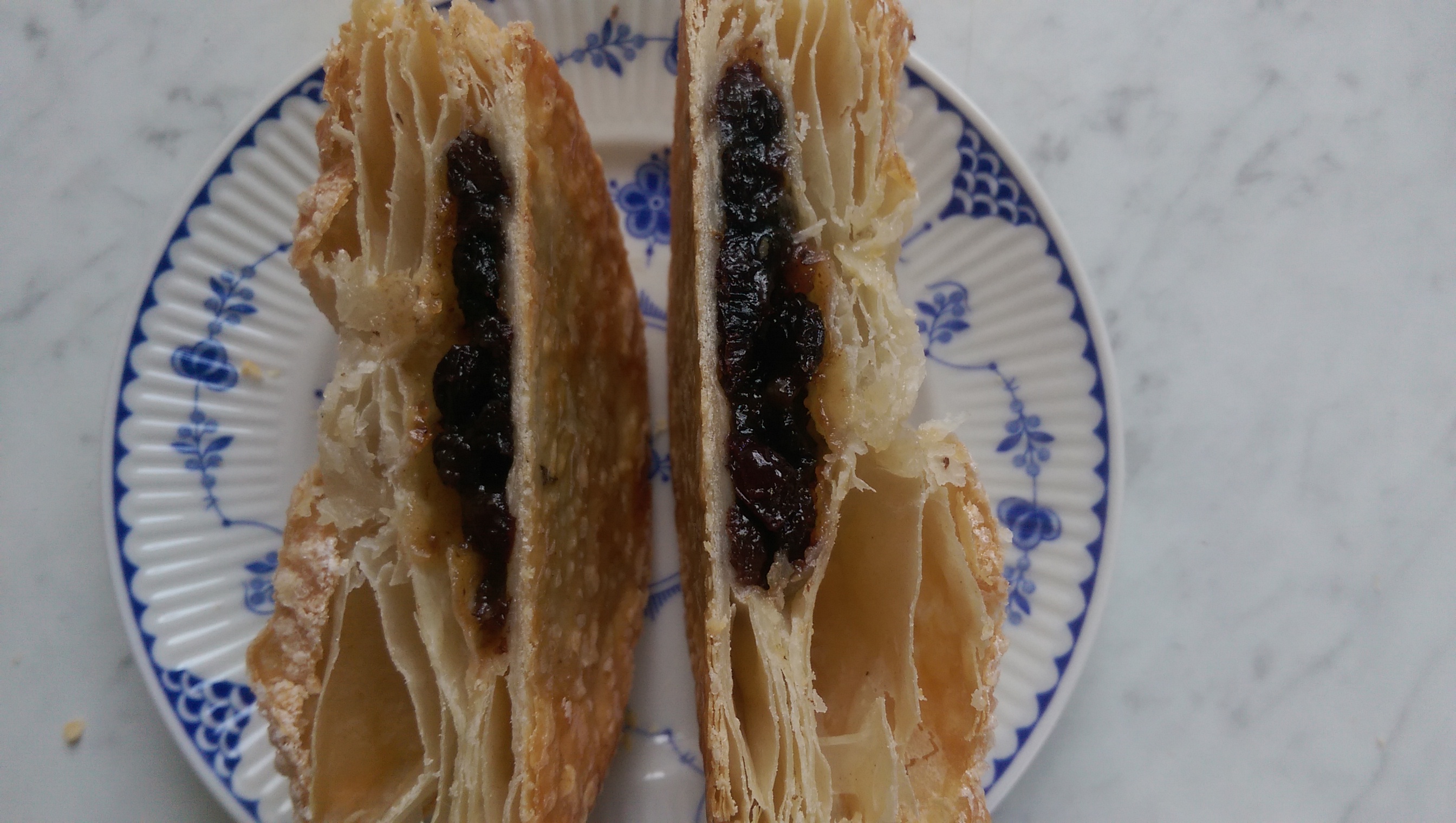
An Eccles Cake is assembled upside down and the base is formed by overlapping the sides of the pastry ring after the filling has been placed. If this is not done carefully there can be several layer of pastry in the centre of the base which overlap to produce a thick plug. This is in contact with the filling and remote from the heat of the oven and can remain barely cooked, spoiling the enjoyment.
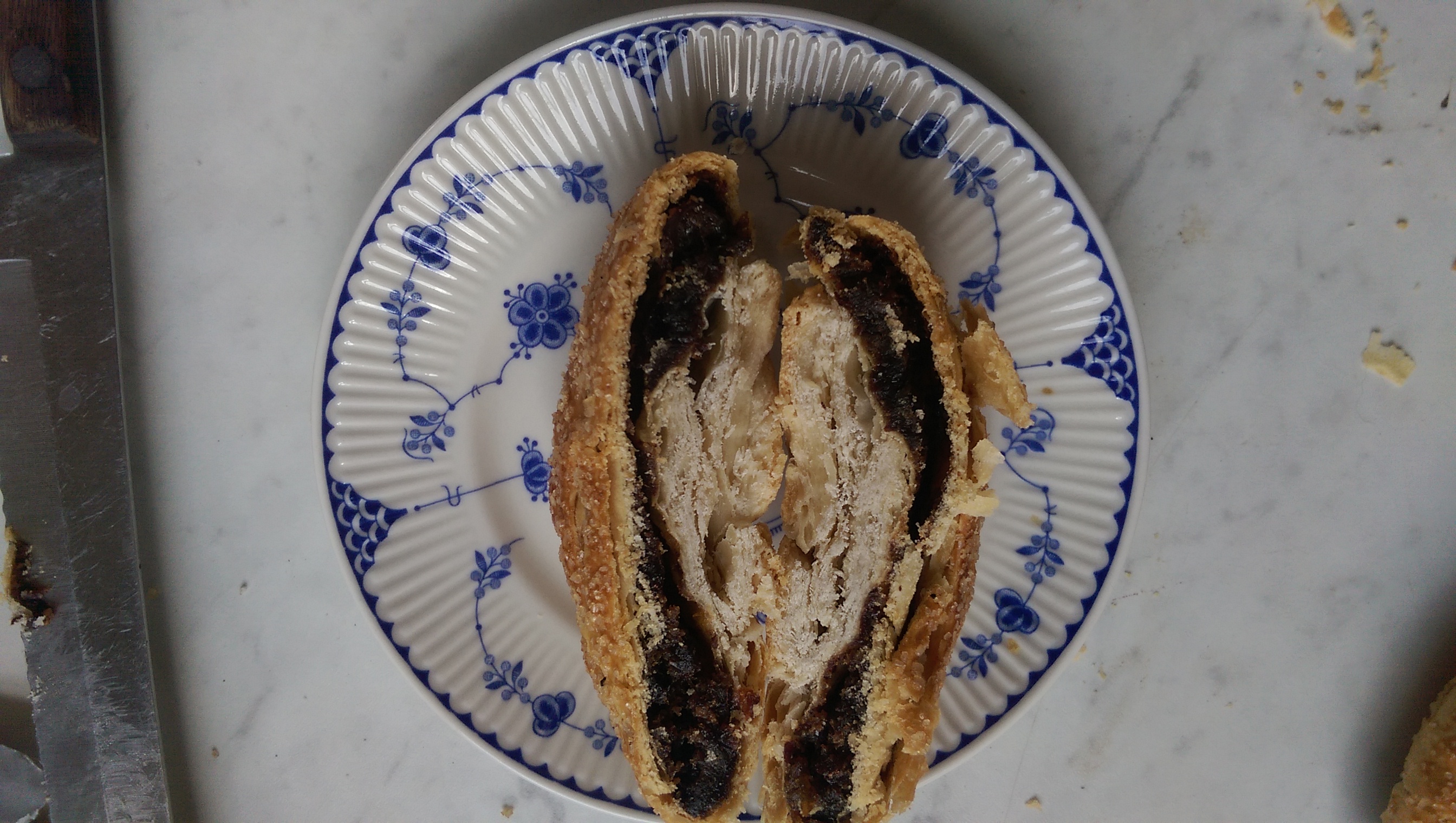
Whisper it not but some, mean spirited, bakers are suspected of doing this to reduce the quantity of filling! The swine.
There are many traps for the unwary when it comes to the filling. Firstly it should be an adequate quantity. One of the best, craft bakers in South Wales, produce the finest pastry but spoil the effect with the meanness of the filling. They are clearly aware of this as some sort of “extender” is mixed with the fruit.
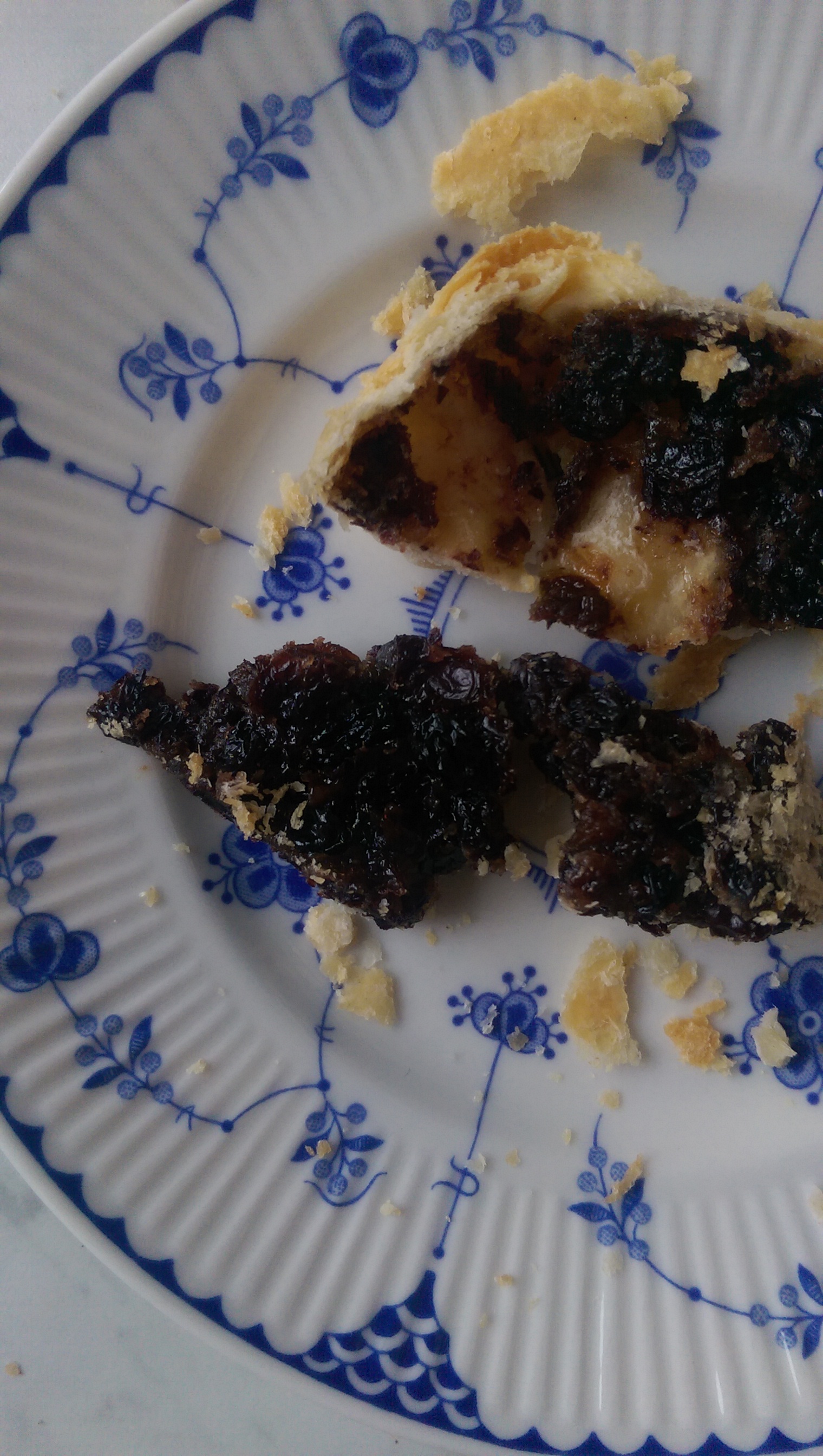
The texture of the filling should be bound. Individual currents, soaked in syrup, ideally over night, lying in little more syrup which should bind them together to form a coherent filling rather than a collection of individual fruit.
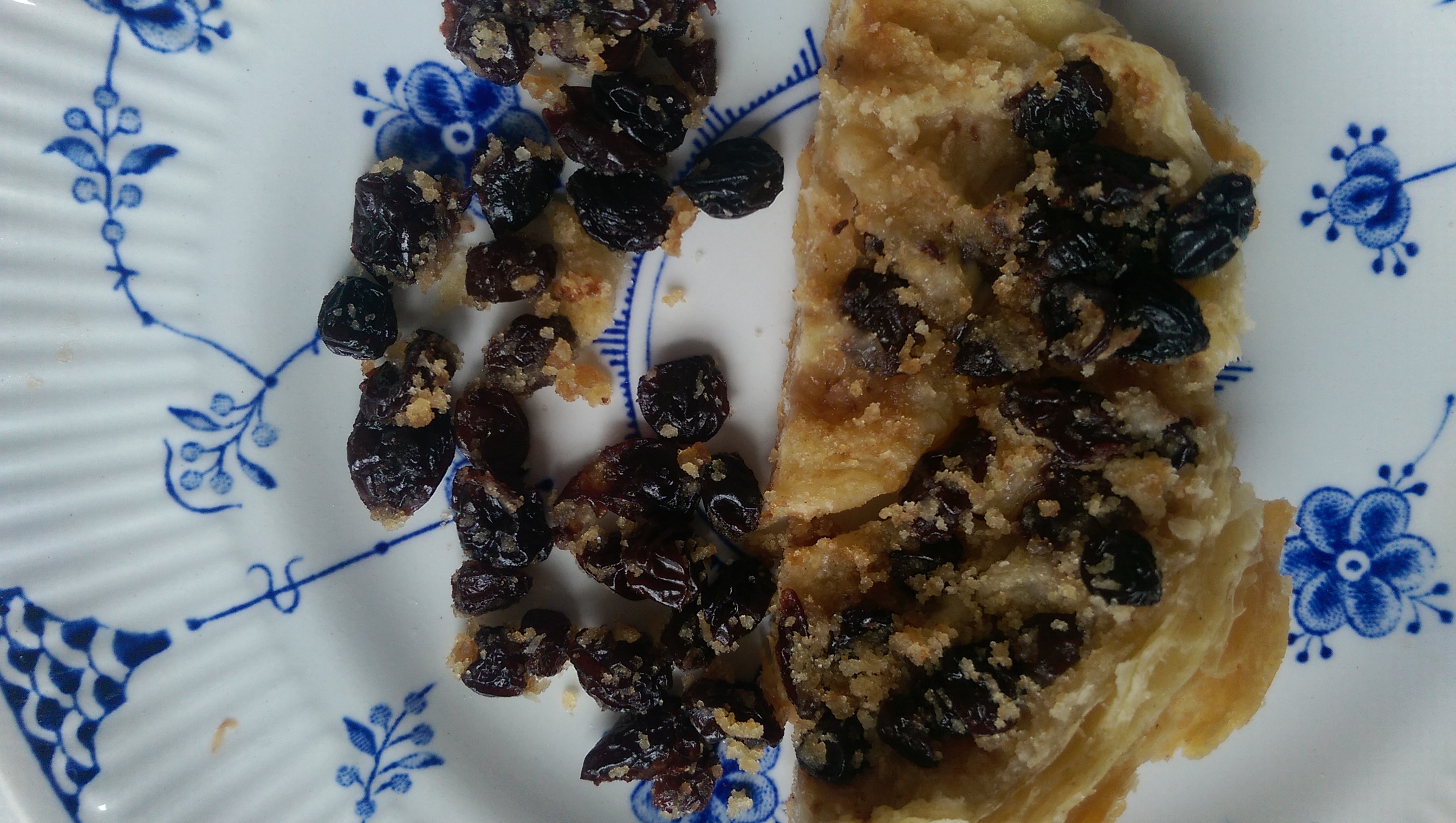
There are three bakers still offering Eccles Cakes baked in Eccles. One is Wards, of whom more later, the other is a Pound Bakery. This store offers 2 Eccles Cakes for £1. The Cakes are not half bad. Extra ordinary value. The currents are not bound and as a result the effect is lost. Fewer currants and fruit steeped in a syrup overnight would hugely enhance the product. Butter in pastry would make it a Finalist.
We do not object to the addition of flavours to the filling but dread the loss of identity of the original concept. An idea of genius.
When our founder first walked the street of Eccles, in 1969, as a student, local bakeries still served defined areas. Streets of terraced houses would support a bakery, often an owner/baker. This was a new experience after the bohemian sophistication of Liverpool. The owner/bakers used the residual heat after baking bread to bake other things, sometimes local people brought their own meals to be cooked
It was in one of these small bakers, sadly long gone, that he first encountered the brown bottomed rascal. The syrup had been allowed to escape and form a layer under the base. This was baked into a thin film of toffee. He has been seeking this “holy grail” ever since.